The 25 Most Important Homes of the Past 25 Years
This story is part of Dwell’s yearlong 25th-anniversary celebration of the people, places, and ideas we’ve championed over the years.
We asked our editors—and some friends of the magazine—to name the houses that defined home design over the past 25 years. We narrowed it down to this list—which includes everyone from Zaha Hadid to Kim Kardashian.
Small House by Kazuyo Sejima
Small House by Kazuyo Sejima
2000
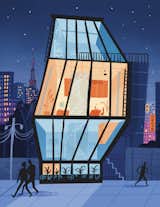
Kazuyo Sejima’s aptly named home occupies a 388-square-foot patch of a typically tight Tokyo lot. Inside, living spaces flow into one another, many separated only by the spiral stair that cuts through each floor of the house. The kitchen, dining area, and living room overlap on one level, while a bathroom opens onto a terrace on the top floor. The floor plates vary in size, with more space dedicated to the public areas on the middle floors than to the more private spaces above and below, allowing the house to have its small footprint and faceted shape. Expressive minimalism and an open plan—it’s all here in a home that kicked off the 21st century.
Wall House by Anupama Kundoo
Wall House by Anupama Kundoo
2000
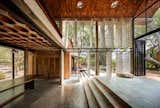
Built in 2000, architect Anupama Kundoo’s Wall House, near Auroville, India, is an experiment with what some might view as outdated building techniques, but the risks taken paid off. Kundoo eschewed conventional construction styles by working with the community of local craftspeople to erect the home using Indian achakal bricks—”the oldest mass-manufactured object in the world,” she told the Financial Times. With soaring, arched roofs made from terra-cotta tubes (which remarkably don’t require any reinforcement) and a plan that’s radically open to its setting, thanks in part to hole-punched, operable ferro-cement screens lining one side of the living spaces, the residence is an enduring example of what can happen when heritage craftsmanship is pushed to its limits. Twenty-five years later, a zeal among designers for Kundoo’s brand of honest materiality and time-honored building techniques has become common all over the world.
“Wall House embodies a low-tech radicalism that has deeply shaped my understanding of material storytelling and labor-conscious design. Its experimental use of ferro-cement and recycled materials has occasionally been critiqued for appearing unfinished or overly ‘vernacular,’ but that rawness feels intentional—a challenge to conventional aesthetics and the economics of polish. For me, it’s a reminder that innovation often comes from resisting the pressure to conform to market-driven definitions of beauty.”
—Anand Sheth, architect/curator
A-Z West by Andrea Zittel
A-Z West by Andrea Zittel
2000–2022
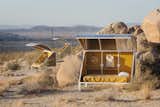
Cover star of our December 2002 issue, Andrea Zittel’s yearslong experiment close to California’s Joshua Tree National Park tried to create escape pods from dystopian modern life—and also unintentionally anticipated contemporary digital nomadism, where white-collar workers leave behind long-term leases to traipse across the world and set up camp wherever there’s good coffee and Wi-Fi.

Zero-Carbon Disaster Relief Homes by Yasmeen Lari
Yasmeen Lari’s Zero-Carbon Disaster Relief Homes
2005–present
After Yasmeen Lari retired from her conventional architectural practice in 2000, she pivoted from designing corporate landmarks to building emergency housing in disaster zones across her native Pakistan. Typically built with local materials like prefabricated bamboo panels, Lari’s “zero-carbon, zero-waste” relief shelters can go up in just a few hours for around $100 apiece, according to Lari. The RIBA Royal Gold Medal winner is hardly the first starchitect to design prefabricated housing for displaced people; she’s in good company with the likes of Pritzker Prize winner Shigeru Ban. Such projects prompt a major question of our moment: What can housing for people displaced by climate disasters or conflict look like?

MDU by LOT-EK
2003
If you’ve ever shopped, dined, or spent the night in a repurposed shipping container, there’s a good chance that it was inspired by LOT-EK. Founders Ada Tolla and Giuseppe Lignano popularized the practice with their Mobile Dwelling Unit (MDU), a portable live/work space set in a steel shell. The MDU was exhibited at museums in the early aughts, and although it was a bit dystopian, it showed that containers can serve as durable, affordable, and shippable structures. LOT-EK kept iterating, and cargotecture boomed in every corner of the world.
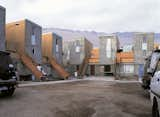
Quinta Monroy by Elemental
Quinta Monroy by Elemental
2003
When the Chilean government commissioned Elemental, helmed by Alejandro Aravena, to create a social housing project with just $7,500 in funding per family, the firm’s solution was radical and practical: concrete homes built with the bare essentials, plus unbuilt spaces that could be customized and completed by residents later. Quinta Monroy was the firm’s first realized project. It presented a new model for social housing and contributed to Aravena’s Pritzker Prize in 2016. Although the project’s approach and long-term impact have met mixed reviews, it has challenged other firms to think beyond aesthetics as they address issues of agency and affordability.

Versailles
2004
Deep in the heart of central Florida, tucked away in a gated community, sits the ostentatious, still unfinished, pile that is America’s very own Versailles—home to late time-share impresario David Siegel and his wife, Jackie. Public interest in the house boomed because of the 2012 documentary The Queen of Versailles and a subsequent, short-lived reality series that aired in 2022. It’s a physical representation of a uniquely American strain of greed and the apotheosis of the McMansion. By no means is it the most beautiful house on the list, but worthy of our attention—a reminder of what unchecked avarice can unleash.
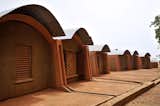
Gando Teachers’ Housing by Kéré Architecture
Gando Teachers’ Housing by Kéré Architecture
2004
Francis Kéré’s Gando Teachers’ Housing, in the architect’s home village in eastern Burkina Faso, was built to attract qualified teachers to the Gando Primary School, also designed by Kéré. It comprises six units arranged in an arc and resembles a traditional Burkinabè compound. Relying on local materials and building strategies, Kéré used adobe walls to frame and support crescent-shaped corrugated iron roofs. Since then, local governments around the world have supported similar housing projects, allowing educators and other essential community members to live where they work.
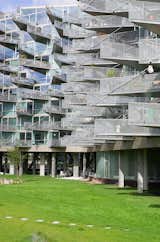
VM Houses by Bjarke Ingels Group
VM Houses by Bjarke Ingels Group
2005
A modern multifamily building typically echoes the design of a modern city—a grid of boxes, each very similar to the next. But the VM Houses in Copenhagen, Denmark, designed by Bjarke Ingels Group and JDS Architects, broke out of that literal box. Intending to “reinterpret and improve” Le Corbusier’s famed Unité d’Habitation, they reconfigured sight lines and reconsidered forms (triangles instead of squares or rectangles!), ultimately ushering in a new era of strange shapes for residential buildings and Ingels’s fame.
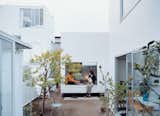
Moriyama House by Ryue Nishizawa
Moriyama House by Ryue Nishizawa
2005
In the early 2000s, Ryue Nishizawa imagined a Tokyo apartment complex as a village of little buildings where every room is in its own white box with square cutouts for windows. The project was modern without nostalgically evoking some past era of glass houses, simple without being boring, and innovative without screaming for attention. Designers around the world embraced the concept’s radical simplicity—featured on the cover of our December/January 2007 issue—which charted a new way forward for 21st-century minimalism.
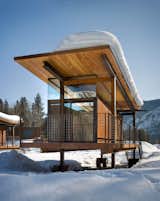
Rolling Huts by Olson Kundig
Rolling Huts by Olson Kundig
2008
Long before glamping was a glimmer in our Instagram feeds, Olson Kundig built six spartan shelters set on massive wheels in a mountain meadow in Mazama, Washington. Made of weathering steel, plywood, and glass and warmed by woodburning stoves, the Rolling Huts distilled the firm’s industrial design language down to the essentials. The rentable retreats have aged admirably over time—and inspired countless other modern-rustic getaways—creating a template for contemporary outdoor escapism.
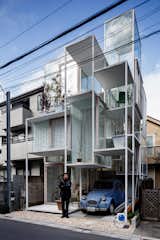
House NA by Sou Fujimoto Architects
House NA by Sou Fujimoto Architects
2010
House NA by Sou Fujimoto is another early example of a viral house. In photos shared round the world, starchitectural photographer Iwan Baan captured daily life in a one-of-a-kind home. Located in a residential area in Tokyo, it imagines tree-house-like living in a transparent, light-filled design. It’s a stark contrast to typical houses in Tokyo or anywhere else. Rooms have individual floor plates that create multilevel platforms linked by ladders and stairs. It might be a challenging setup to actually live with, but it sure looks great in pictures.
“It’s hard to recapture how disorienting the first wave of 21-century Japanese architecture was to Western eyes. There were so many projects that seemed to be drawn with so few lines I found myself asking, You can do that? Sou Fujimoto’s House NA, the subject of many a Tokyo architecture pilgrimage, is one of those, with its thin frame, multiple levels, and vulnerability to the street. Even if I don’t know if I’d ever be ready to live in such a house, I appreciate the way it dismantles assumptions about what is necessary in a home.”
—Alexandra Lange, 2025 Pulitzer Prize–winning architecture critic
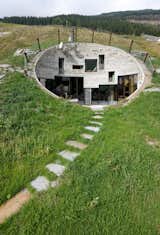
Villa Vals by SeARCH and CMA
Villa Vals by SeARCH and CMA
2009
If you clicked through the blogosphere in the late aughts, there’s a good chance you’ve seen Villa Vals before, an early internet-famous home. Set in the Swiss Alps, the rural village of Vals is known for its thermal baths by Pritzker Prize–winning Peter Zumthor, pristine scenery, and traditional gabled houses roofed with locally quarried quartzite. Contemporary homes here are few and far between, so when architects Bjarne Mastenbroek and Christian Müller of SeARCH and CMA, respectively, set out to design one, they opted to dig deep rather than build up. Accessed via an existing barn and a subterranean tunnel, Villa Vals is almost completely concealed from view, save for an elliptical, stone-clad patio carved into a grassy hillside that captures the imagination. Call it a high-end hobbit hole.
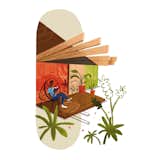
Casa Verde by Alberto Kalach
Casa Verde by Alberto Kalach
2011
Few architects blur the line between nature and architecture like Alberto Kalach—just look at Casa Verde, his 1,033-square-foot home in Mexico City. Sprouting from the rooftop of an existing 1936 house near Chapultepec Park, the cabin-like dwelling is encased in glass and surrounded by a wild, overgrown garden. The wood-framed interiors are simple, deferring to the overflowing foliage, which takes up more than half the grounds. This sensitivity to site, along with a focus on natural materials, typifies Kalach’s work, which has been a source of inspiration for many architects, including, as he recently reminded Dwell, Tom Kundig.
“The residential work of Alberto Kalach is truly visceral—you can feel the natural spirit of the raw materials as they ground your connection to place. Casa Verde, located in Mexico City, is an example of successful placemaking that is sensitive to the larger context. Simultaneously tough and beautiful, the home weaves seamlessly into the surrounding landscape in a way that deeply resonates and inspires my own design approach.”
—Tom Kundig, Olson Kundig cofounder

Casa Wabi by Tadao Ando
2014
This art foundation and residency in Puerto Escondido, Mexico, showcases Tadao Ando’s signature use of exposed, unadorned concrete, albeit with a wild-card palapa roof. Since then, celebrities have sought out Ando homes; Beyoncé and Jay-Z purchased one in Malibu, and Ye, formerly known as Kanye West, made headlines for gutting the Ando property there he previously owned. Thanks to Ando, a former boxer, luxury has never been so hard.
“Casa Wabi is an oasis in the scrubby landscape of the Oaxacan coast. The brilliance of the project is not just Tadao Ando’s gorgeous axial concrete form that unifies sculptor Bosco Sodi’s studio, home, exhibition space, and visiting artist residency, but in the collection of other interventions scattered throughout the 27-hectare Alberto Kalach–designed gardens, including a chicken coop by Kengo Kuma, and a ceramics pavilion by Alvaro Siza.”
—Joseph Becker, SFMOMA curator of architecture & design
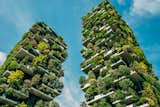
Bosco Verticale by Boeri Studio
Bosco Verticale by Boeri Studio
2014
While he was touring Dubai’s gleaming glass skyscrapers in 2007, Stefano Boeri had an idea for a different kind of high-rise. The Italian architect envisioned a tower enveloped in a leafy facade of trees and shrubs that would promote biodiversity, reduce energy consumption, and improve air quality. His first Vertical Forest took root in Milan in 2014, earning numerous awards while stirring up debate about greenwashing—and since then he’s branched out to complete similar projects in the Netherlands and China.
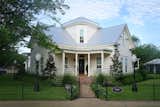
Magnolia House by Chip and Joanna Gaines
Magnolia House by Chip and Joanna Gaines
2015
HGTV is a cultural juggernaut of the recent past, thanks in part to the tireless efforts of Chip and Joanna Gaines, the couple responsible for Fixer Upper and the shiplapification of Waco, Texas. The modern farmhouse style is the Gaineses’ calling card, immediately recognizable by sight if not by name—and the best (and most overt) example is Magnolia House, an 1800s home in McGregor, Texas, that got the full Fixer Upper treatment in 2015. Think whitewashed walls, matte black fixtures, apron sinks, and nostalgia for a fantasy version of the past—and a house that looks just like all the others in your neighborhood.
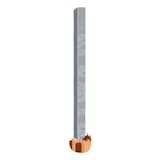
432 Park Avenue by Rafael Viñoly Architects
432 Park Avenue by Rafael Viñoly Architects
2015
It wasn’t the first “pencil tower” and might not even be the most noteworthy on the current New York skyline, but 432 Park Avenue, designed by Rafael Viñoly, is a now-unavoidable part of Billionaires’ Row in Manhattan and has come to define the current luxury market, arguably for the worse. Many of its apartments have been sold to foreign investors and remain empty for much of the year; the ones that are occupied have seen residents suing the developers over a litany of complaints. If there ever was a building that encapsulated the growing housing crisis by its mere skinny presence towering over the city, this is it.

Color(ed) Theory by Amanda Williams
Color(ed) Theory by Amanda Williams
2014–2020
By painting empty houses slated for demolition on Chicago’s South Side, artist Amanda Williams turned these buildings into bold but ambiguous statements. She chose colors from brands marketed toward Black Americans to highlight the disinvestment and discrimination undermining the area’s neighborhoods and many others like them across the United States.
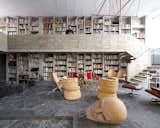
Pedro Reyes and Carla Fernández House
Pedro Reyes and Carla Fernández House
2015
Artist Pedro Reyes and fashion designer Carla Fernández designed their boxy concrete residence in the Mexico City borough of Coyoacán with a nod to Mexican brutalism with its hard-edged geometry, but it also serves as a teeming studio and a showcase for their work. A rotating display of textiles by Fernández and pieces by Reyes fill the space, blending traditional Mexican craft and the global project of upending the legacy of European colonialism. It’s simultaneously a home and a statement of values.
“This collaborative home-studio—made from concrete, earth, and local craft—sits at the intersection of art, domestic life, and architecture. Some see its brutalist aesthetic as cold or confrontational, yet within that rawness is a radical tenderness: a space shaped by two creative practices in dialogue. It speaks to the potential of domestic architecture to become a site of co-creation, where boundaries between living, making, and thinking dissolve—something I also explore in my own home studio and multidisciplinary work.”
—Anand Sheth, architect/curator
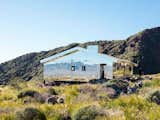
Doug Aitken’s Mirage
2017
At the inaugural Desert X exhibition in 2017, artist/filmmaker Doug Aitken covered a ranch-style house in the foothills of California’s San Jacinto Mountains with mirrors. The reflective facade allowed the structure to disappear into the desert landscape, stripping the iconic Western suburban typology of its humanity. That was until people showed up and made it all about them. The mirrors made for iconic selfies, and onlookers clogged up the once-quiet streets, in an attempt not just to see the installation but to take a picture of themselves reflected in this viral “house.” Almost a decade later, we still see the influence of Aitken’s reflective creation; on Airbnb, from Texas to Iceland, you can now rent a mirrored house and take as many selfies as you want, undisturbed by crowds.

Kim Kardashian’s House by Axel Vervoordt
Kim Kardashian’s House by Axel Vervoordt
2017
The ship that launched a thousand beiges: It’s the palace that Kim Kardashian and Kanye West created in Hidden Hills, California. Axel Vervoordt, along with Claudio Silvestrin, Vincent Van Duysen, and Family New York, stripped back the details of a generic mansion to create a very strange blend of suburbia and austere European luxury that—for better or worse—set the standard for boring high-end home design in the Instagram age.

Capital Hill Residence by Zaha Hadid
Capital Hill Residence by Zaha Hadid
2018
The 2000s were the age of the starchitect, and no star shone brighter than Zaha Hadid. Her work exemplified the formal extravagance and outsize egos of the age, when any client with a big-enough check could get their own chunk of astral architecture. Hadid’s only house, designed for Russian hotelier, real estate developer, and former Naomi Campbell consort Vladislav Doronin, embodies the excesses of the otherworldly moment.
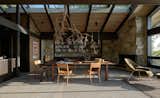
Loom House by the Miller Hull Partnership
Loom House by the Miller Hull Partnership
2019
We weren’t exaggerating in our May/June 2021 feature on this Bainbridge Island, Washington, home when we said it may be the world’s most ecologically ambitious residential renovation. The Miller Hull Partnership’s 2019 overhaul of the Loom House, designed in the 1960s by architect Harold Moldstad, made it the first residential remodel to achieve Living Building Challenge (LBC) certification (a standard for regenerative buildings). The house met LBC benchmarks for net-positive water, on-site water treatment, and net-positive energy and abided by a strict “Red List” of more than 800 common harmful chemicals in materials, which interior designer Charlie Hellstern extended to the furnishings. It’s a poster child for the green design movement.
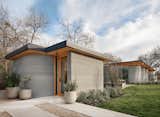
House Zero by Icon and Lake Flato
House Zero by Icon and Lake Flato
2022
Companies that are 3D printing homes look like they’re having a lot of fun. Robotics! iPads! Working round the clock! But so far, as much as we hear about tech delivering better homes faster and cheaper, often in the name of slaying the housing shortage, it still just feels like boys playing with toys. Even so, Austin company Icon and San Antonio architecture firm Lake Flato have produced one of the most impressive robot collaborations: a ranch-style residence that marries modernism’s box-fresh forms with 3D printings’s goopy, earthy layers, designed with remarkable reverence for its setting.

Honorable Mentions
The last 25 years have also introduced whole new categories of houses.

The Prefab House
When Dwell was founded, “prefab” connoted glorified trailers, cheaply built midcentury structures dropped onto a site and left to molder. But the promise of industrially produced homes found new champions, not least of which was this magazine. A watershed came with the exhibition organized by curator Barry Bergdoll at New York’s Museum of Modern Art in 2008. Home Delivery: Fabricating the Modern Dwelling presented full-scale work by architecture studios that proved prefab could break out of its rundown reputation and present innovative ways of building. Now, contemporary prefab has become mainstream, and unfortunately it has to some degree come to represent an unrealistic promise of an inexpensive box magically dropped into place. But it continues to offer ways of building that outperform traditional construction when it comes to efficiency, ecology, and costs.
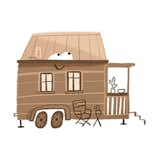
The Tiny House
The tiny-house movement was born of the American desire to break free from the shackles of mortgage debt. But downsizing doesn’t always foster financial freedom—a tiny house can cost just as much as a regular one, especially if the resident’s intention is a more aesthetically elevated life. Early iterations, like Jay Shafer’s 110-square-foot house built on a trailer, set the standard, helping to launch a dream that just won’t go away.

The ADU
The biggest housing type on the block today is likely one you can’t see. That’s because it’s cropping up in backyards: They used to be called “granny flats,” but now they’re ADUs—accessory dwelling units—or a version of that acronym, defined as a separate or sometimes attached living space added to a residential property, and they’ve slowly been collecting steam across the country as jurisdictions adopt pro-density legislation. And it’s easy to see why. By building an ADU, a homeowner can generate new income by adding a rental unit to the market. For others, they can keep a parent or the kids close by. And at a time when buying a starter home is increasingly difficult, families can work together to build out the space they need with property they already own. Whatever the application, safe to say that the boom in backyard housing has only begun.
The Affordable House
Even before dodgy home loans began a global financial crisis in 2007, the cost of a home was outpacing what most people earned. After a big-picture economic recovery, owning a home became perversely elusive to many people. It happened alongside a tragic increase in the number of people without houses of any kind in the United States and beyond. Many designers have stepped up to create homes that fight against the tide—including the 2021 Pritzker Prize winner, French firm Lacaton & Vassal. No single design has provided a perfect solution, but the quest for an affordable house has defined an era, and the best designers have continued to try to solve the problem of building them.

The Monopoly House
Ask a kid to draw a house, and chances are you’ll get a gabled roof. In 1997, Herzog & de Meuron completed its House in Leymen, which distilled the archetypal Dick-and-Jane form into a concrete abstraction. The shape became a concept, a stand-in for traditional domesticity run through a rational modern style; the firm even built a stack of such structures for the Vitra campus in Weil am Rhein, Germany, in 2009. Post-Y2K, the trope would be taken up by designers in numerous ways around the world. It has become a shorthand for an underdefined “vernacular architecture” tightened up with a fashionable minimalism in seemingly any context anyplace whatever. Bonus points for signaling an idea of craft by adding charred wood siding.
—
Top photo of Wall House by Javier Callejas, courtesy of Anupama Kundoo Architects
—
This story is from our September/October 2025 issue, which hits newsstands September 9. Read the new issue by subscribing to Dwell.
link