Interior design gets grounded – Yahoo News Canada

In 2026, interior design won’t likely be a site of radical change or shocking reveals. Instead, the rapid pace of technological change in the world seems to be making people dig in their heels a little at home, creating a gravitational pull toward what feels grounded, tactile and lived in. Simply put, in an AI-driven world, trends are refreshingly evolving at a human pace.
According to designer and trend observer Arren Williams, “maximalism is still very much alive, but in a more thoughtful, layered manner.” Comfort is essential, he says, “but so is charm. People want rooms that feel personal.” That means decorating with meaningful pieces you feel a connection to, creating a type of nostalgia that isn’t decade-specific. “We’re in a moment where eclecticism makes it easy to blend periods and styles, and that tension is what gives rooms real depth,” he says.

An earthly palette grounds the Tercos tableware collection by Casa Cubista, available at saudadetoronto.com.
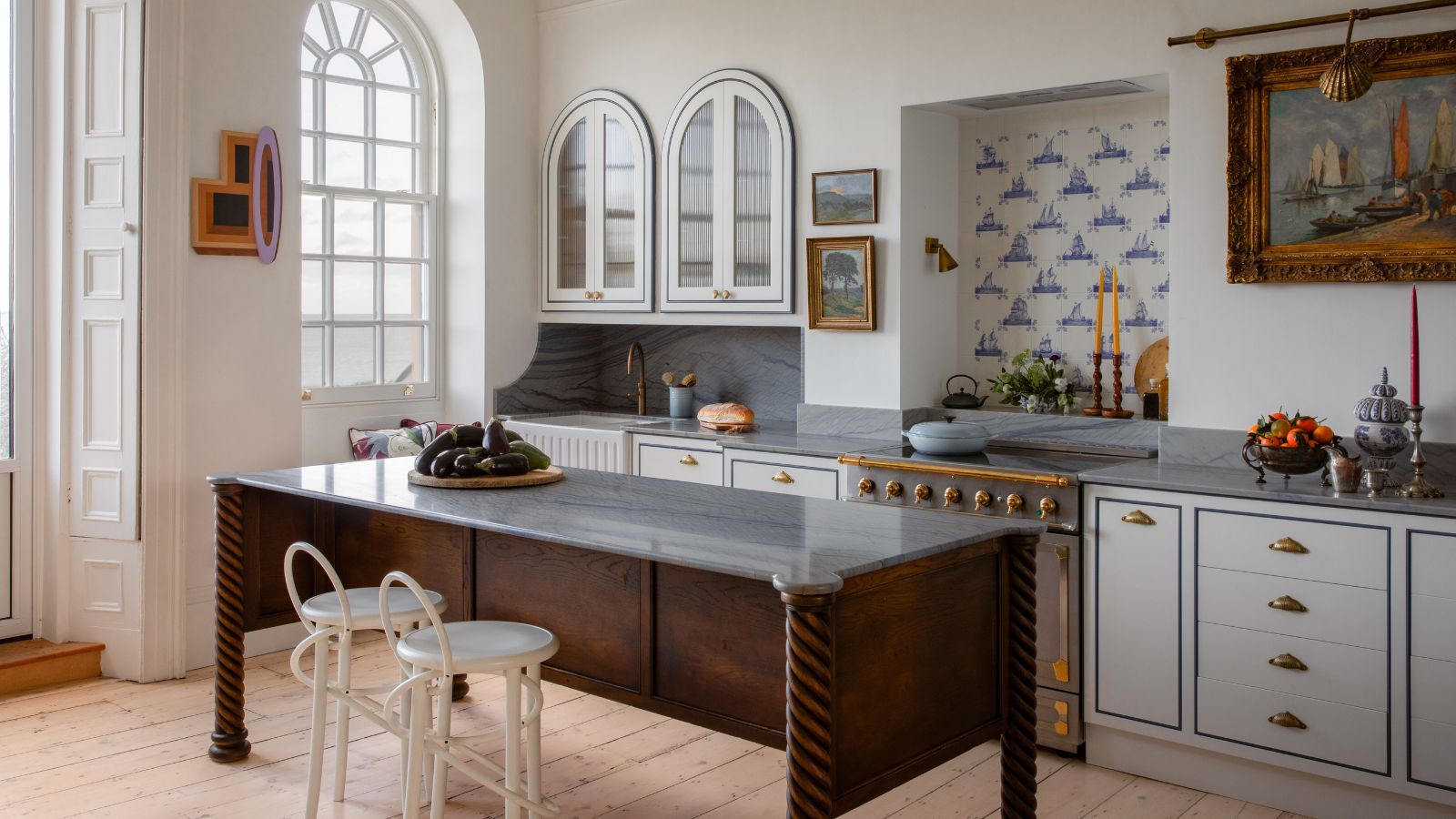
A standout trend for 2026, he says, is the colour story: deep greens, burgundies and strong blues are creating a richer, moodier palette. “Blue kitchens are gaining real momentum, with brands like Ikea tapping into the trend by introducing a new blue cabinetry option (called Lerhyttan).”
As far as new-feeling neutrals go, one of Williams’s standbys for 2026 is “white, black and caramel. It’s almost foolproof — very Club Monaco meets Ralph Lauren,” he says, adding that the look can be achieved by mixing sculptural, modern pieces with heritage ones. The tension between eras — old and contemporary, refined and relaxed — gives 2026 interiors warmth and individuality.

Chrome is having a comeback, especially among the under-35 set. This Forged Chrome Pull is from Crate & Barrel.
The same desire for grounded, quietly expressive spaces plays out in Benjamin Moore’s 2026 Colour of the Year, Silhouette, an espresso-charcoal hybrid. “It brings a sense of soft, sophisticated comfort home,” says Sharon Grech, a media spokesperson in Colour Marketing and Design at Benjamin Moore. Its connection to last year’s Cinnamon Slate is deliberate, a gentle evolution of the previous shade rather than a pivot. Across the eight-colour capsule, lower-chroma hues dominate: mineral greens, kiln-fired clay tones, tender blush neutrals, nostalgic mauves. “There is a great desire for spaces that bring balance and reassurance,” she adds.
Even the bold, all-encompassing colour-drenching trend of 2025 is giving way to a more cocoon-like effect. Instead of painting an entire room one hue, different shades from the same colour family can be applied in a gradient pattern, a technique that, Williams notes, was pioneered during the Victorian age. The gradient can shift from light to dark as you move up towards the ceiling, or the reverse, to create a layered, sophisticated effect.

Blue kitchen cabinetry is high on the 2026 trend list, according to designer Arren Williams. Ikea answers the call with its latest cabinet colour, Lerhyttan.
Wallpaper is also enjoying a renaissance, particularly in libraries, dining rooms and powder rooms. “Contained spaces love pattern,” says Williams, whether lush botanicals or the return of bright, small-scale florals.
This trend pairs well with pastels. Williams calls out one of the freshest combinations for 2026: mint-coloured walls with a beigey-pink ceiling — a soft, contemporary look infused with a sense of nostalgia.

A neutral backdrop comes to life with fluted details, ripple-glass cabinets and a natural stone fireplace; a bright patterned area rug provides a visual anchor.
Materials and textures are also continuing their slow evolution. Soft curves and fluting remain a major direction, now appearing in new forms alongside ripple-glass lighting and fluted bathroom sinks that almost read as ruffled fabric. Calm zones throughout the home rely on materials that invite touch: carved wood, honed stone, sanded finishes, plaster.
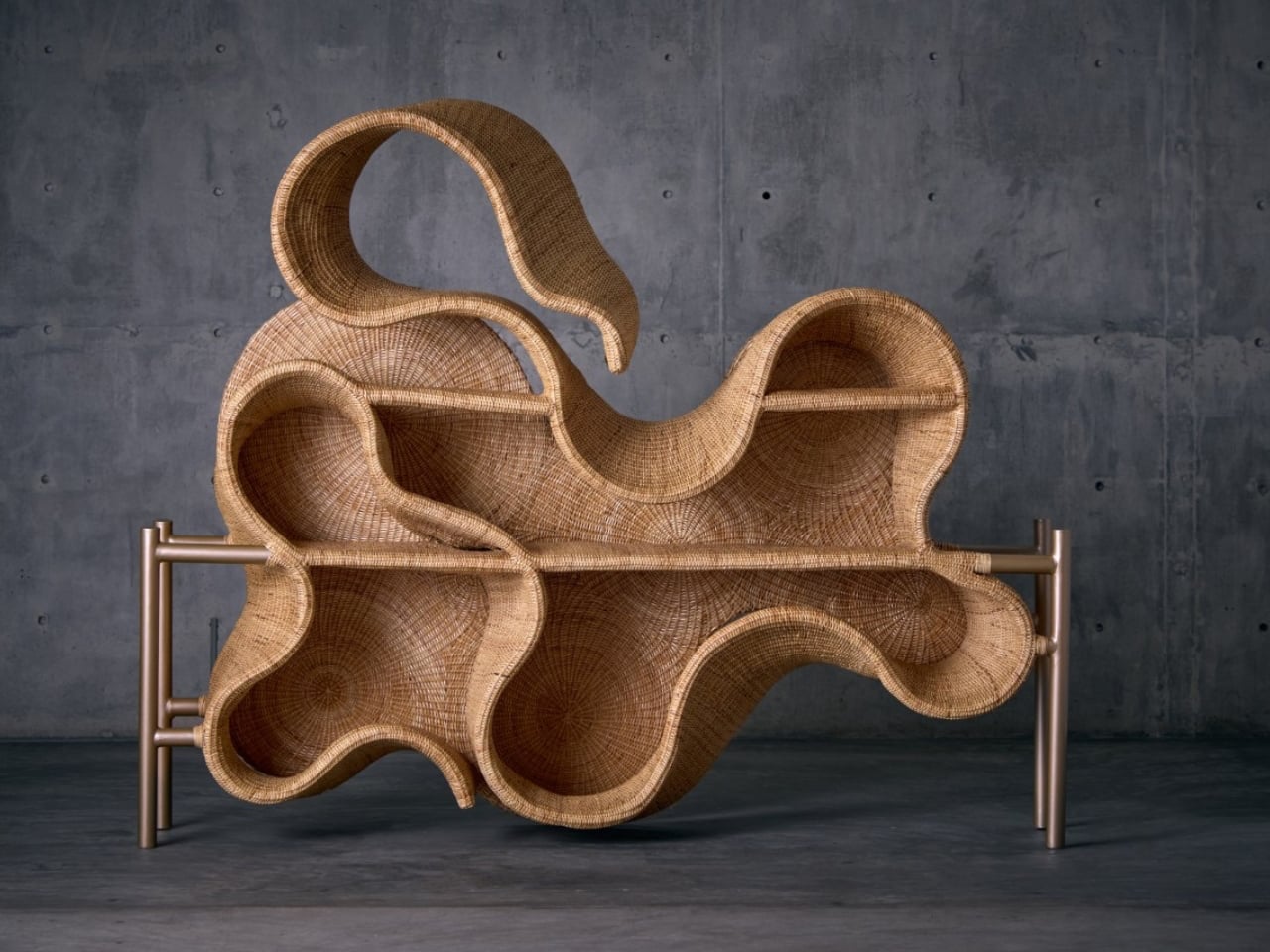
Handmade objects are no longer niche; they are an antidote to digital saturation. “In a world full of A.I. fakery, anything created by a human hand becomes more valuable, more meaningful,” says Williams.

Pink walls, trim and moulding are grounded by burgundy-brown bedding. The charming Noto lamp on the nightstand was designed by Arren Williams for Renwil.
Natalie Venalainen, senior designer at Men at Work Design Build, echoes that this focus on tactile, thoughtful design will trickle down to “the things we touch and use every day — the ease of a kitchen faucet, the weight of a door lever, the softness of a throw. In 2026, we’ll continue to see a rise in mixed-material elements that add tactile richness and moments of delight to everyday living.”
Cooler metals are re-entering the spotlight after brass’s long run. “Silver and chrome are gaining traction again, especially among the under-35 age group, since they didn’t grow up with it,” Williams notes. Stainless-steel kitchens are returning, as is silver-leaf cabinetry, which offers a quieter, more reflective option. “If you lean more Parisian-contemporary, silver leaf paired with low lighting and moulding is incredibly chic,” he adds.
Venalainen also highlights the enduring appeal of cool metals: “I never truly left them behind. Gunmetal offers a contemporary, refined alternative to brushed nickel, and silver leaf adds luminous warmth to cabinetry, mirrors and furniture.”

Maison Martin Morel’s Dahlia wallpaper in Dazzling Ginger — a recent collection from newwall.com — revives a bold archival motif from the 1900s.
Through her lens, the interiors and brand photographer Liron Weissman captures the cultural shift in real time through her work. “We’re collectively moving past the era of perfect polish,” she says. Instead, intentional authenticity looms large, she says, prompting us to answer the bigger questions like “Who shaped this space? And what does it feel like to belong here?”
If there’s a through line for 2026, it’s this: the homes that resonate most are the ones that reflect you, not your avatar, and definitely not what an algorithm decides you should like. As William puts it, “People don’t want their homes to look like their neighbours’ (anymore), and that’s a good thing.”
link