Inside a home awash with neutral tones and texture

For a low-key design esthetic, neutral colours can elicit surprisingly strong opinions. People will comment on videos of home tours and swoon over the serenity of the space or conspicuously yawn and dismiss them as dull.
Designer Agathe Corbet, founder of Ama Studio, wanted to use neutrals to create a calming vibe in her home, but she knows how to make them anything but boring. As she says in this episode of On the Inside, the key is to add layers of texture in all its forms — which she and her husband have expertly done.
“We played with lots of natural materials,” she says. “So we have marble in the kitchen. We have a lot of wood, rattan, linen, jute. And I think that gives the house some interest even though there’s not a lot of colour.”


Corbet, her husband and their cat, Moustache, live in a roughly 1,300-square-foot house in Wellington, Ont., in Prince Edward County, which the couple largely renovated on their own.
“There’s been a lot of DIY,” she says. “All of the paint and drywall, the flooring, the microcement, the tiles — we’ve done quite a bit ourselves.”
In Corbet’s home office, where she designs spaces for her clients, the details make the room.


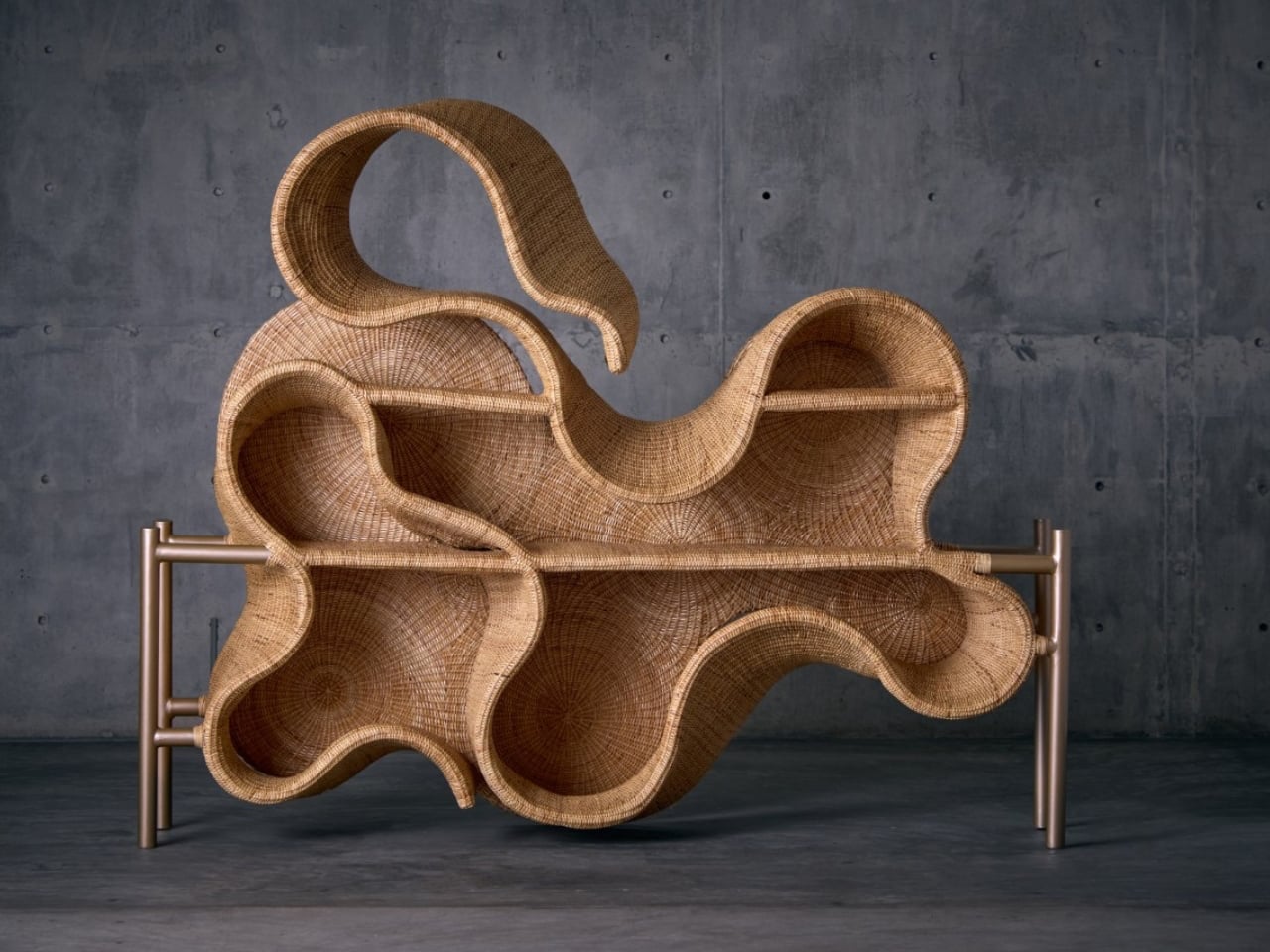
The sculptural black sconce was custom-made in France, and a Noguchi pendant light hangs above Corbet’s desk, which she designed. Custom-made, too, it has three legs — one in the form of a squiggle, which was tricky to execute. “I had to reach out to, like, maybe 10 different furniture makers before I could actually find someone who agreed to take the challenge,” she says. “And I think the desk is now really the statement piece in my office.”
To make the wood panelling look authentic to the home, Corbet and her husband cut the boards to different widths. “It was a lot of work, but I think it was worth it,” she says.
Our home was designed to have a soothing effect rather than being overstimulating. It is a feeling that I try to achieve when I design a space, rather than fit a style.– Agathe Corbet


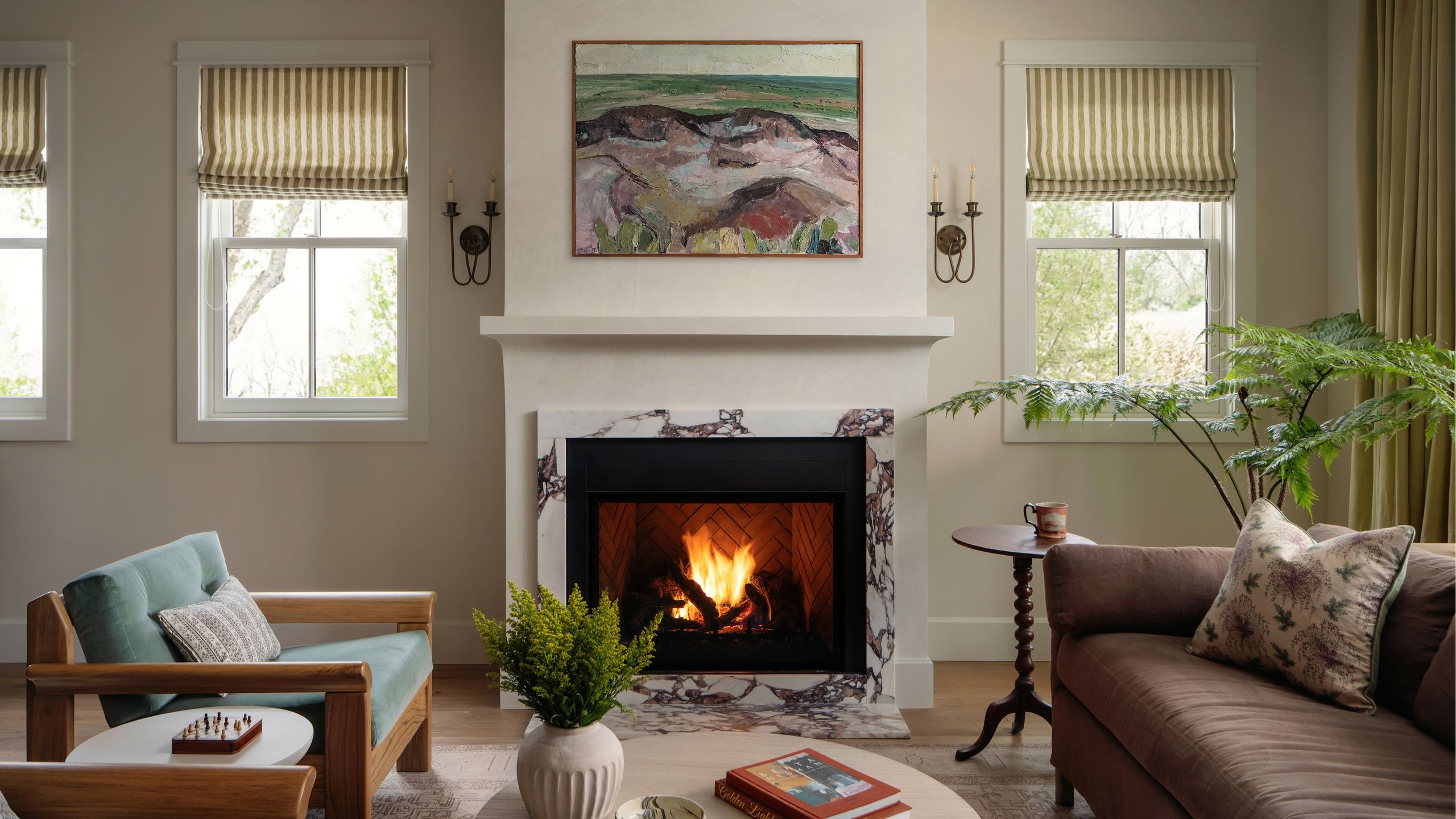
The open-concept living and dining area is delineated by the sofa, and both spaces were styled to be cosy and inviting. Sheers hang in the windows; thick Moroccan rugs anchor the furniture; and the upholstery — including cat-friendly velvet and sheepskin — was chosen for its tactile character.


The kitchen — which shares a warm, subdued colour palette with the rest of the home — stands out with its relative absence of textiles. But the room was very much designed with an eye toward texture.
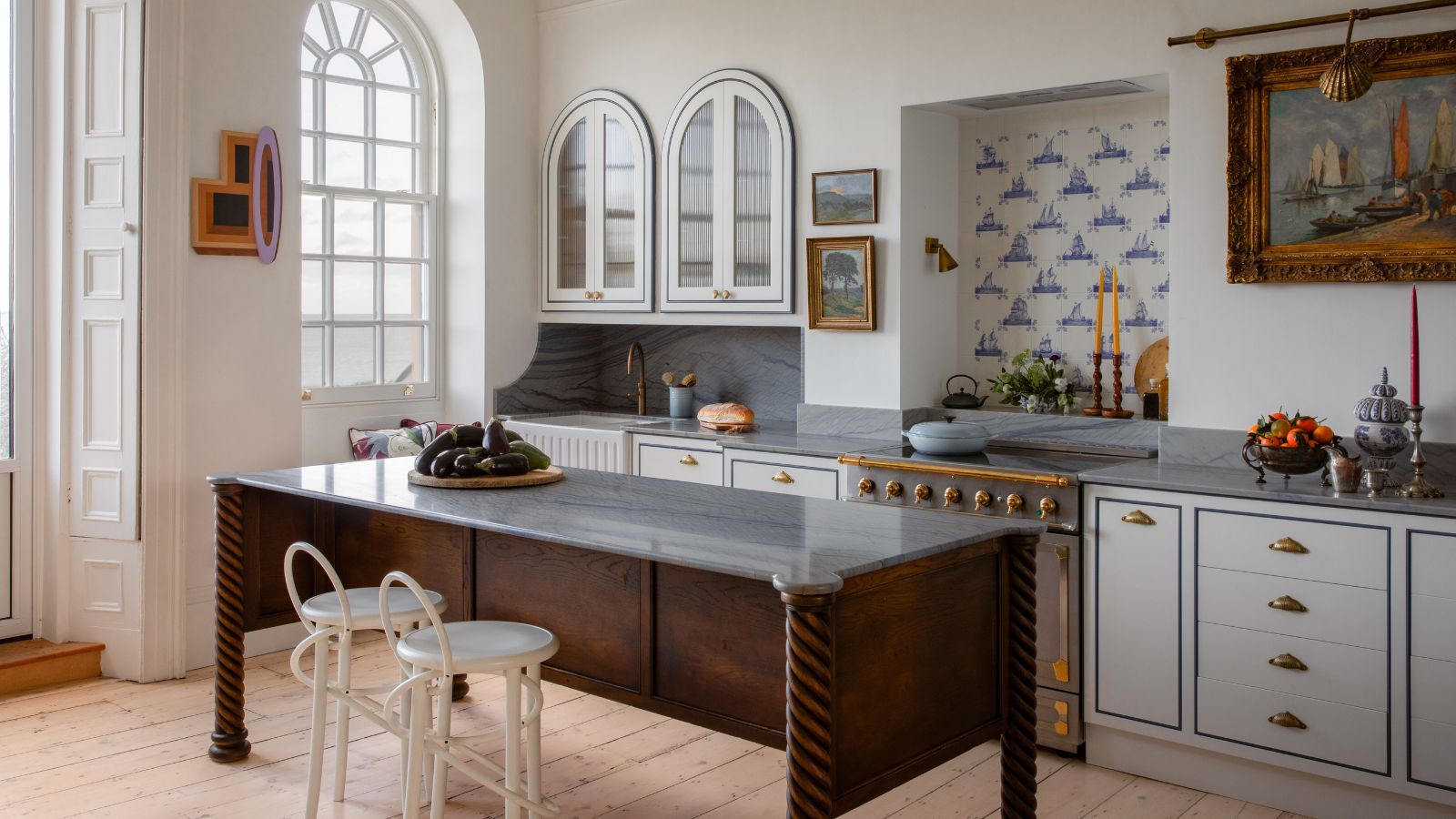
Rattan inserts line the doors of the appliance cupboard. The white-oak cabinetry masking the fridge and dishwasher have a matte finish for a raw-wood feel, and the Crema Marfil marble on the kitchen island and countertop was honed to match. Even the plaster pendant lights have a tangible quality.
The exception is the glossy sheen of the zellige-tile backsplash. “It adds some contrast to the space and some depth,” Corbet says. “It’s also great to reflect the natural light.”


Zellige tiles appear in the bathrooms as well and add brilliance amid otherwise matte surfaces — including a microcement vanity in the guest bathroom. “It really makes it look seamless and has that Mediterranean organic vibe that I really love,” she says.
In her primary bathroom, the shower door — made using antique brass — is Corbet’s favourite feature. “I didn’t want it to look too bright and yellow,” she says. “We had a little bit of a hard time finding someone who could make that happen, but it was worth the effort.”


Corbet’s guest room, where family stays for extended visits, is a space she describes as a cosy cocoon. Velvet drapery hangs in lieu of a closet door, saving space in the small room, and the walls and ceiling are covered in textured wallpaper.


For the main bedroom, Corbet put an array of materials to work. “We have bouclé fabric for the headboard; the rug is a Moroccan wool rug,” she says. “On the walls, we have lime-wash paint, which also adds a little bit of texture, and then we have leather with the pendant lights. And the drapes are a silk fabric.”
Creating built-in shelves gives the room a streamlined feel, as did curving the drywall around a corner to add softness. “It’s a little bit more challenging to build than making a straight corner, but you can actually bend the drywall,” Corbet says. “Sometimes it takes a few tries because the drywall breaks.”


“What we wanted with the house was a very calm and neutral feeling,” Corbet says, “I think we’ve done a pretty good job with it. There’s nothing where I’m like, ‘Oh, we shouldn’t have done that ourselves.’”
And she doesn’t regret the effort. “Having no kitchen for nine months was not fun,” she says. “But … when you do the work yourself and you live through the reno, I feel like you enjoy the end result even more.”
Watch this episode of On the Inside to see Corbet’s calm yet captivating home, and read on for more about her thoughts on design.
WATCH | On the Inside: The home covered in neutral tones:
Agathe Corbett on her approach to designing her own home
(As told to CBC Life. These answers have been edited and condensed.)
Our home was designed to have a soothing effect rather than being overstimulating. It is a feeling that I try to achieve when I design a space, rather than fit a style.

When designing my own home though, it’s all a bit more intuitive than when I design for clients. It’s important that my house feels curated and is a reflection of our personality.– Agathe Corbet
The colour scheme of our house is very neutral, but it is layered with textures so it feels interesting and not boring. The house is filled with pieces that I love. Some of them travelled with us from Australia — we lived in Sydney for five years before moving to Canada. Some are from our travels, and there’s also a lot of DIYs and custom pieces.

[My approach to designing] all starts with a mood board to define the overall look and feel I want to achieve. Having a clear vision helps me in the decision process — and there’s a lot of decision[s] to make to renovate an entire house!
When designing my own home though, it’s all a bit more intuitive than when I design for clients. It’s important that my house feels curated and is a reflection of our personality.
link