


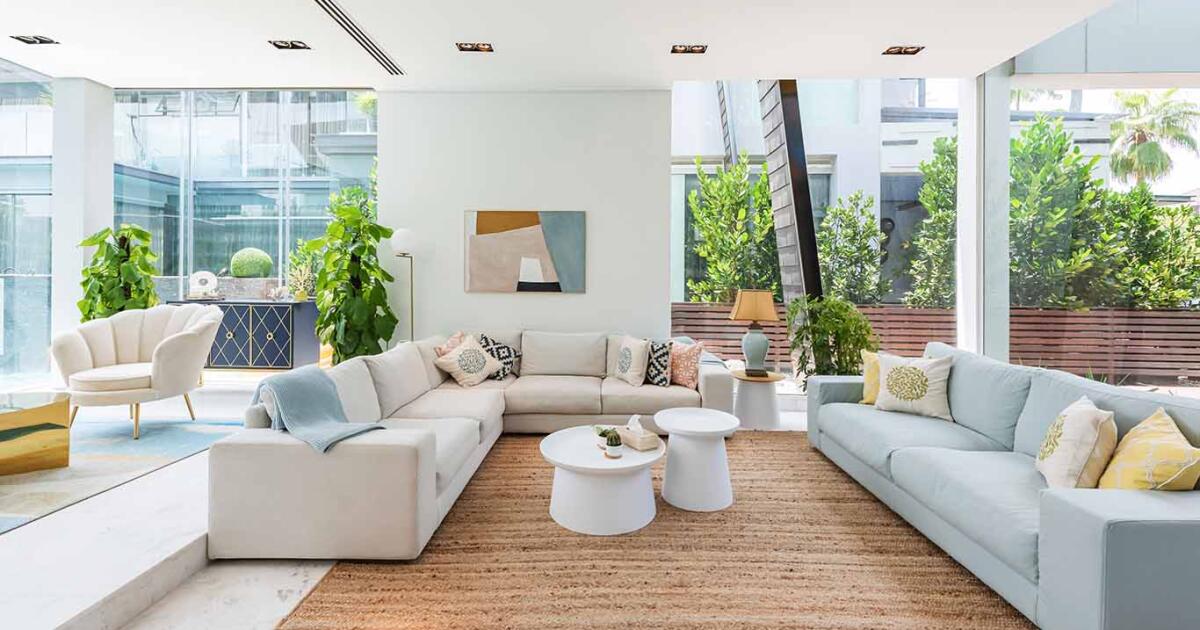
It was the oversized entryway, the statement chandelier, the kind of marble that made the room feel like it was trying to impress someone.
But designers say the definition has changed. The most aspirational homes we’re seeing now aren’t the biggest or flashiest, but the ones that feel good to live in, in a way that’s harder to capture in a photo.
That’s where the idea of experience-led living comes in.
RELATED: Your Home Is Either Supporting Your Biology…or Stressing It Out
Agnieszka Wilk, CEO of Decorilla, describes it as designing around how you want to feel inside a space, not just how you want it to look. “Experience-led simply means living in a home that’s designed around how you want to feel and function,” she says. “Everybody desires a beautiful room, but this is about designing for the moment.”
It’s less about looks as the starting point and more about habits. “If a client tells us they unwind by cooking and hosting, the kitchen must be a sociable gathering space,” Wilk says. So, we’re not just looking at nice rooms but spaces that hold the life happening inside it.


Wilk says luxury used to be louder. “I’d say that luxury used to be about excess,” she explains. “It could be measured in square footage and loud statement artwork.” Now, she says, it’s shifted toward comfort. Toward restoration. Toward the home feeling like it gives something back.
RELATED: 2026 Home Design Trends: Ruggable Says Cold Minimalism Is Over
“Nowadays, luxury interiors are linked with experience-led living,” she says, “with the focus now being on optimal comfort… spaces that feel restorative.”
Lighting is one of the first places this shows up. “People are becoming increasingly focused on lighting,” Wilk says.
Not the decorative kind, but the kind that changes how the day feels. Dimmable warmth at night, brighter light in the morning. Her clients are wanting homes that adjust with you, using circadian-friendly lighting that supports how your body actually wakes and winds down.
RELATED: Kids Bedroom Ideas That Grow With Your Child
Texture has changed, too. “People want homes that feel tactile and homely,” she says, “not glossy and untouchable.”
There’s less interest now in rooms that feel staged.
Storage Ideas That Maximize Style and Function
The Emotional Side of Practical Design
Wilk says the shift is emotional, but it’s also practical in a very real-life way. “People just want their home to work better for them.” Open-plan living is a good example. “Work calls, kids, and life all happened at once,” she says. That’s driven the move toward more dedicated spaces.
RELATED: 5 Best-Performing Building Materials for Modern Homes
People are designing around mental load now, even if they don’t call it that. “People are a lot more protective of their mental health,” Wilk says, “and that is definitely showing up in how they set up their homes.”
What Clients Say Instead of “Experience-Led Living”
“Most clients don’t walk in saying, ‘I want experience-led design,’” Wilk says. “They say, ‘I can’t relax here.’” And that becomes the job for Wilk. To translate that feeling into design.
“If they want spaces that mean they get to wind down and disconnect after a hectic day,” she explains, “that then converts into a smarter layout and different material choices.”
RELATED: Feng Shui Paint Colors: A Guide to the 5 Elements
A lot of this overlaps with hospitality and wellness design, even if no one is trying to turn their house into a hotel. Wilk points to restorative design showing up in small decisions like softer lighting, natural materials, and elements that reduce sensory overload.
“In homes, there are a lot of wellness principles that are shown through restorative design,” she says. She thinks it’s especially obvious in the rise of the spa-like bathroom. “I think this is especially obvious in the rise of the spa-like bathroom,” Wilk notes.
Homes, she says, have become less about presentation. “Homes have become a sanctuary for people to ‘switch off.’”
link